Production confidence
Support helps operators run the equipment consistently.
Line upgrades
Labelling line upgrades can improve output, presentation or reliability without replacing every part of the packaging line.
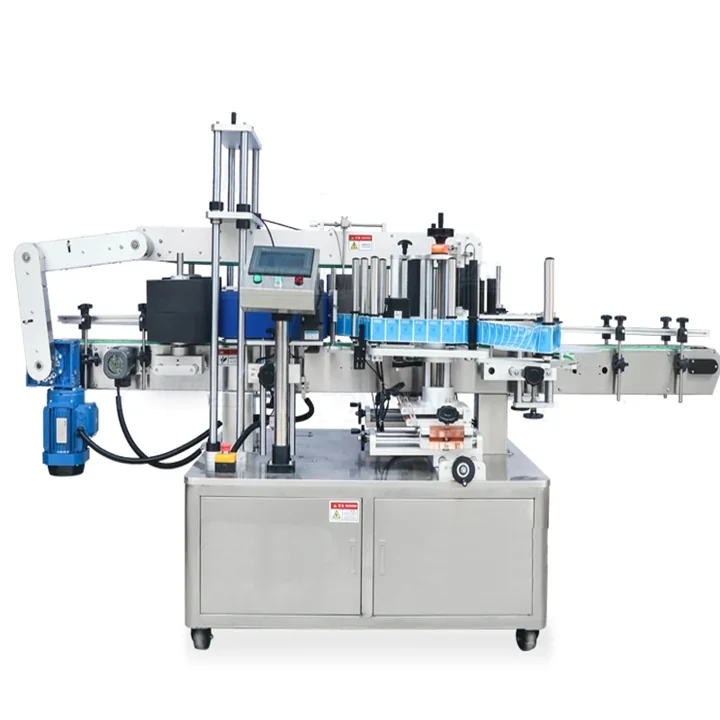
Selection intent
The machine purchase is only one part of the project. Reliable output also depends on installation, operator confidence, spare parts, maintenance and repeatable setup.
Service support should be discussed early so the quote includes the practical items needed to make the machine productive.
Support helps operators run the equipment consistently.
Spares and maintenance planning reduce avoidable stoppages.
Changeover support helps add new packs and labels later.
Machine routes
Most projects start with the pack shape, label position, material and output. These are the core machine routes to compare before requesting a quotation.
Best for established production where two labels need to be applied consistently in one pass.
Useful for smaller footprints, lower-volume production, trials and fast SKU changes.
Useful for flat packs, cartons, trays, sleeves and products requiring label application to upper and lower faces.
Quote preparation
For support enquiries, explain the machine type, serial details where available, current problem, pack formats and whether the issue is mechanical, electrical, setup-related or process-related.
For new projects, include support expectations at quotation stage so training, commissioning and aftercare can be scoped properly.
Related pages
These pages help connect the search route with machine type, application and buying guide intent.
Set up new machinery correctly.
Maintain production reliability.
Test difficult products and labels.
Ask for support.
The useful starting details are container dimensions, label size, label material, output target, photos of the pack and whether the labelling machine needs to connect with filling, capping, coding or inspection equipment.
Yes. Lancing UK can compare compact, automatic, twin-side and top/bottom labelling options against the pack, label material, changeover needs and output target.
Yes. Samples, drawings, label artwork and short videos of the current process help confirm handling risks before a final machine recommendation is made.
Share the pack, label material, output target and any integration requirement. The team can help you compare the most suitable compact, automatic or top/bottom labelling route.
Retrofit survey
A retrofit should start with an interface survey, not an assumption that a spare length of conveyor is enough for two label heads. The existing conveyor must present the pack consistently, support the required guides or hold-down arrangement and leave safe space for reels, operation and maintenance. Control changes and acceptance responsibilities belong in the quotation scope.
| Conveyor and pack control | Show travel direction, belt or slat type, usable width, transfer gaps, height and the actual container condition. |
|---|---|
| Physical access | Provide drawings or photographs showing both sides, obstructions, guards, reel-change access and the available removal route for components. |
| Signals and sequence | Identify product triggers, encoder reference where used, ready/fault signals, downstream stops and what happens to packs between the heads. |
| Material and inspection | Include both label constructions, code generation, inspection views, reject station and the required response to roll end or missing labels. |
| Project ownership | Identify who modifies controls, reviews safety, updates drawings, performs testing and approves the complete installed line. |
Possibly, but the conveyor and handling must be assessed together with the heads. A belt that moves bottles successfully between machines may still allow movement at the label point. Compare retaining, modifying or replacing that section against the required placement, access and interface conditions rather than purchase price alone.
Supply the existing machine and control references, a dimensioned layout, representative packs and label rolls, photographs of both sides of the line and the required stop/restart behaviour. Mark what must be retained and what may change. This lets the review distinguish an applicator addition from a broader handling or controls project.
Use the line-integration guide and reel-change recovery checklist to define the interfaces. Final modification and safety responsibilities must be confirmed for the installed system.
Include the container, both label constructions, target output and any existing line constraints.