Label stock
Material, adhesive and liner influence sensor choice and wipe-down.
Self adhesive labelling
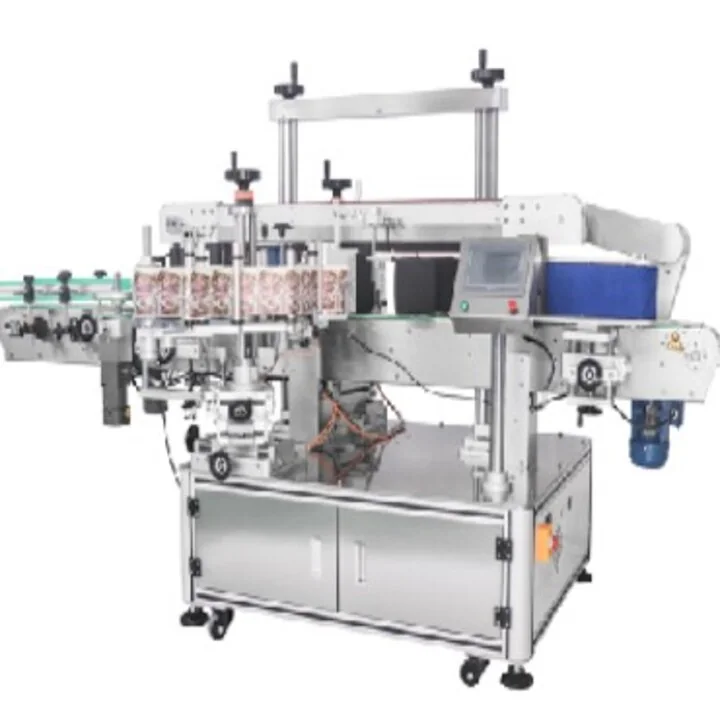
Self adhesive label applicator machines apply pressure-sensitive labels from a reel to the product surface. For front and back labelling, the machine must also control pack orientation and wipe-down so the label adheres cleanly.
Selection intent
Self adhesive labelling performance depends on the label material, adhesive, liner, surface finish and pack shape. The applicator needs to be matched to the real label stock, not just the container size.
For clear, film or textured labels, sensor selection and label presentation are especially important.
Material, adhesive and liner influence sensor choice and wipe-down.
The machine must apply enough controlled pressure without disturbing the pack.
Core size and reel direction affect how the applicator is configured.
Machine routes
Most projects start with the pack shape, label position, material and output. These are the core machine routes to compare before requesting a quotation.
Best for established production where two labels need to be applied consistently in one pass.
Useful for smaller footprints, lower-volume production, trials and fast SKU changes.
Useful for flat packs, cartons, trays, sleeves and products requiring label application to upper and lower faces.
Quote preparation
Send a sample label roll or label specification where possible, including label size, gap, core diameter, outside roll diameter and reel winding direction.
For difficult products, the best enquiry includes a physical pack sample and label sample so adhesion and presentation can be checked before purchase.
Related pages
These pages help connect the search route with machine type, application and buying guide intent.
Route for transparent and film label projects.
Understand sensor selection.
Sample testing support.
Buyer guide for bottles.
The useful starting details are container dimensions, label size, label material, output target, photos of the pack and whether the labelling machine needs to connect with filling, capping, coding or inspection equipment.
Yes. Lancing UK can compare compact, automatic, twin-side and top/bottom labelling options against the pack, label material, changeover needs and output target.
Yes. Samples, drawings, label artwork and short videos of the current process help confirm handling risks before a final machine recommendation is made.
Share the pack, label material, output target and any integration requirement. The team can help you compare the most suitable compact, automatic or top/bottom labelling route.
Material qualification
Pressure-sensitive labels share an adhesive application principle, but their constructions can feed and release differently. The label face, adhesive, liner, die-cut, added layers and winding direction all belong in the machine brief. A trial with a standard paper label is not evidence that a textured, metallic or booklet version will run on the same setup.
| Printed design or foil area | Check whether the sensing line or inspection reference is affected. A visual redesign can alter optical detection even when dimensions stay the same. |
|---|---|
| Liner or die-cut | Confirm clean separation, a usable gap and stable tracking through the existing sensor and peel geometry. |
| Additional layers | Review maximum thickness, opening features, nip clearances and permissible wipe-down contact. |
| Adhesive or substrate | Test the actual container surface and specified application conditions; dispensing successfully is separate from achieving durable adhesion. |
No. A clean dispense demonstrates release from the liner and transfer under the tested conditions. The adhesive still needs to suit the substrate, surface condition and service environment. Agree adhesion assessment with the converter and check the pack after the relevant dwell and handling conditions.
The label sensor guide and extended-content application guide separate material qualification from assumed machine capability.
Include the container, both label constructions, target output and any existing line constraints.