Useful
Useful for skincare bottles, lotions, gels, shampoos, creams and personal-care packs.
Cosmetics labelling
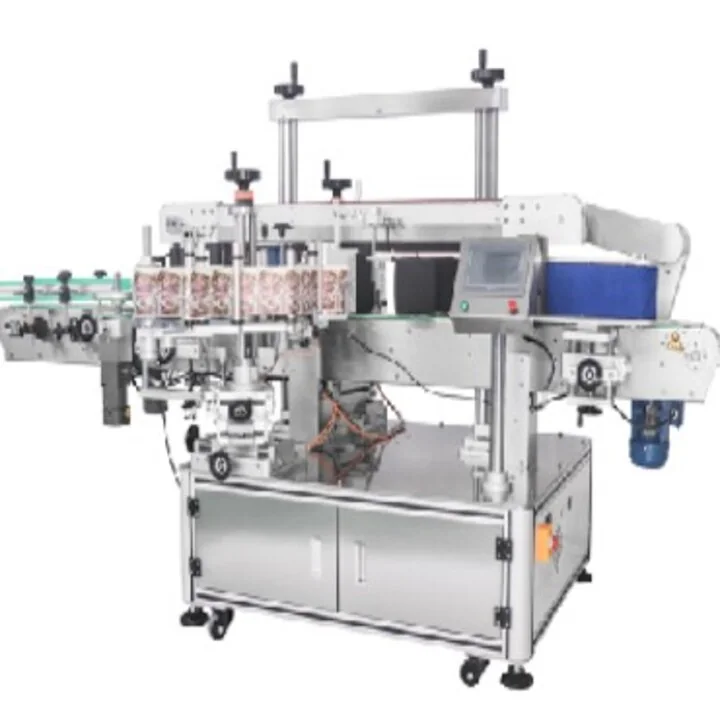
Cosmetic and personal-care products often need high presentation quality, clear label placement and repeatable changeovers across many bottle and jar formats. Front and back labelling machinery should be selected around product shape, label finish and brand presentation.
Project checks
Useful for skincare bottles, lotions, gels, shampoos, creams and personal-care packs.
Supports front branding labels and rear ingredients or barcode labels.
Compact routes suit lower volumes and product trials; automatic routes suit higher outputs.
Clear, gloss or film labels should be checked with the right sensor setup.
Machine route
Lower-volume or mixed-SKU work may suit a compact twin-side labeller, while continuous production normally needs an automatic front and back labelling machine with conveyor control. Where filling, capping, coding or inspection sits nearby, line integration should be included in the first brief.
Representative bottles, jars, cartons and labels help confirm application method.
Output target affects the correct machine format and conveyor arrangement.
Tell us your product type, pack shape, label size, output target and current production process.
Cosmetic pack qualification
Cosmetic packs often combine shaped bottles, presentation-led labels and pumps or closures that alter product stability. The labelling route should be qualified with the finished pack and production-equivalent labels.
Gloss, soft-touch, textured or flexible plastic surfaces can change label adhesion and the pressure a container can tolerate between guides or side belts. Test filled and empty conditions when wall stiffness or centre of gravity changes materially.
Transparent film, metallic effects and complex artwork can influence gap sensing, edge visibility and the placement datum. Use the actual face material, liner and artwork construction during sensor and application trials.
Tall pumps, trigger heads, droppers and decorative caps can raise the centre of gravity or interfere with a top hold-down path. The closure fitted during the trial should match the production pack.
Product residue, mould release, dust and handling marks can reduce adhesion or create visible bubbles. Define where the pack is cleaned or inspected before the labeller, particularly for oils, lotions and creams that may reach the label panel.
Use the label adhesion guide to separate surface-condition problems from machine setup, and review clear-label sensing and presentation where transparent film is used.
| Flat or rectangular cosmetic bottles | Confirm usable panel width, side radii, mould seams and whether the bottle remains square through both applicator heads. |
|---|---|
| Oval bottles | Confirm how the pack is centred and prevented from rotating as the changing contact point passes each head. |
| Jars and low containers | Confirm guide contact, lid or closure geometry and whether the label panel is above a base or shoulder radius. |
| Lightweight packs | Confirm side-belt and wipe-down pressure with the pack in its normal filled condition. |
Send representative containers, closures and label rolls so Lancing can compare flat-bottle, oval-bottle, compact and automatic routes.
Decorative and information labels
Cosmetic packaging often combines a decorative front label with instructions or multiple languages on the rear. Foil, clear areas, textured stock and peel-and-read constructions need their own material review even when the bottle shape stays the same. Assess the consumer-facing finish and the machine’s repeatable feed as two related acceptance tasks.
| Decorative face | Mark areas where roller contact, rubbing or scuffing would be unacceptable and identify the inspection reference for the finish. |
|---|---|
| Rear information label | Record whether it is a flat label or a layered construction, plus the accessible opening tab and closure of the label after application. |
| Pack handling | Test the real filled or empty condition, closure profile and surrounding conveyor contacts rather than an isolated empty bottle. |
| Artwork variants | Keep product, language and front/back label pairing under the same job approval, especially when packs share similar colours and shapes. |
Check thickness, tab direction, sensor path, release from the liner and wipe-down contact, then examine the closed label after normal downstream handling. Changing only the artwork reference is not enough because the physical construction has changed. Ask the converter and machine supplier to review a production-equivalent roll.
The booklet and peel-and-read application guide sets out that review. Use the material-specific sensor guide for clear, metallic and layered stock.
Include the container, both label constructions, target output and any existing line constraints.