Sector constraints
Label material, cleaning and handling expectations vary by product category.
Contract manufacturing labelling
Contract manufacturers and co-packers need flexible labelling machinery because pack sizes, labels and customers change regularly. Repeatable setup and changeover planning are central to the buying decision.
Selection intent
Different sectors create different packaging risks. Some need high presentation quality, some need chemical-resistant labels, and others need fast changeovers across multiple customer formats.
A useful shortlist starts by identifying the pack family, label material, production environment and operational constraints.
Label material, cleaning and handling expectations vary by product category.
Multi-SKU environments need repeatable settings and operator-friendly adjustments.
Spares, setup support and operator training protect production uptime.
Machine routes
Most projects start with the pack shape, label position, material and output. These are the core machine routes to compare before requesting a quotation.
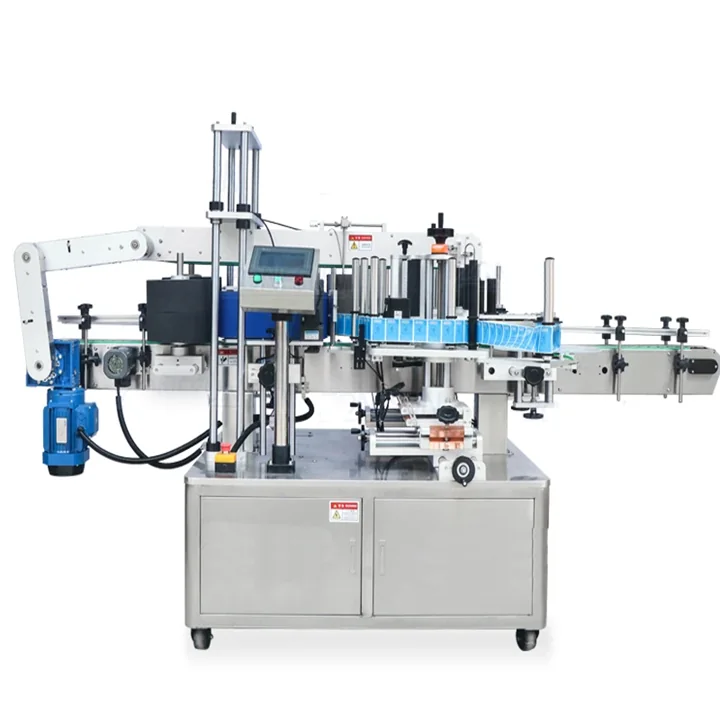
Best for established production where two labels need to be applied consistently in one pass.
Useful for smaller footprints, lower-volume production, trials and fast SKU changes.
Useful for flat packs, cartons, trays, sleeves and products requiring label application to upper and lower faces.
Quote preparation
For sector-specific projects, send details of the product range, pack materials, label materials, output requirement and any compliance or barcode needs.
If a contract packer or multi-SKU operation is involved, include the expected number of changeovers per shift or week so flexibility can be considered.
Related pages
Compare machine types, pack applications and buying guidance before preparing your enquiry.
Compare by pack format.
Flexible multi-SKU production route.
Prepare repeatable settings.
Support for production reliability.
Build a format matrix for the customer jobs the machine must handle: pack dimensions and stability, front and rear artwork references, production roll details, and the agreed position checks. Ask which adjustments are recorded manually or in controls, which format parts are required, and how a job change is cleared and approved. During the sample trial, request a change to another agreed format and back again, recording the operator work and first-off results.
Yes. Lancing UK can compare compact, automatic, twin-side and top/bottom labelling options against the pack, label material, changeover needs and output target.
Yes. Samples, drawings, label artwork and short videos of the current process help confirm handling risks before a final machine recommendation is made.
Share the pack, label material, output target and any integration requirement. The team can help you compare the most suitable compact, automatic or top/bottom labelling route.