Suitable
Suitable for cleaning fluids, detergents, oils, lubricants and industrial liquids.
Chemical labelling
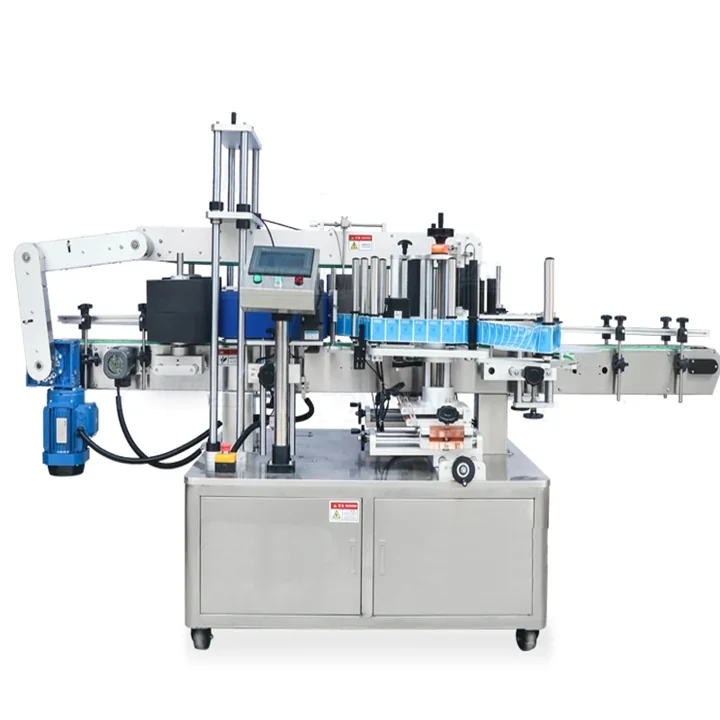
Chemical and household products often require durable front branding plus rear safety, hazard, barcode or instruction labels. A suitable front/back labeller helps keep these labels consistent across bottles, jerrycans and shaped containers.
Project checks
Suitable for cleaning fluids, detergents, oils, lubricants and industrial liquids.
Label material should be matched to moisture, handling and chemical exposure.
Large rear information panels can require careful label feed and product control.
Line integration can include filling, capping, coding and inspection stages.
Machine route
Lower-volume or mixed-SKU work may suit a compact twin-side labeller, while continuous production normally needs an automatic front and back labelling machine with conveyor control. Where filling, capping, coding or inspection sits nearby, line integration should be included in the first brief.
Representative bottles, jars, cartons and labels help confirm application method.
Output target affects the correct machine format and conveyor arrangement.
Tell us your product type, pack shape, label size, output target and current production process.
Chemical pack qualification
Chemical-product labelling projects should be specified around the real container, surface condition, label construction and operating environment. Final material suitability and safety controls depend on the actual product and a site-specific assessment.
HDPE bottles, jerrycans and trigger-spray packs can flex, lean or present an off-centre handle. Confirm how the filled pack is guided and whether contact pressure changes the usable label panel.
Detergent, oil or chemical residue can reduce adhesive contact and contaminate belts or guides. Define the upstream capping, wipe-down and leak-check process before accepting the label finish.
Paper, film and clear labels behave differently when exposed to moisture, oils or chemical contact. The label supplier should confirm material compatibility, while the machine trial confirms dispensing, sensing and application.
Front branding, rear instructions, hazard communication, barcodes and batch data can compete for limited panel space. The machine specification should identify which information is pre-printed, which is added online and which defects must trigger a stop or reject.
Use the coding and labelling line guide and the inspection and reject guide to define the interfaces without assuming that every project needs the same camera or coder.
| Flexible detergent bottle | Test side pressure, panel deformation and label wipe-down with the normal fill volume. |
|---|---|
| Trigger-spray pack | Confirm trigger orientation, centre of gravity and clearance above the bottle during stabilisation. |
| Handled container or jerrycan | Confirm handle orientation, recessed panels, filled weight and conveyor transfer between line stages. |
| Clear or film label | Confirm sensor choice with the actual face material, liner, gap and artwork construction. |
Send representative samples and the operating constraints so Lancing can confirm the appropriate machine and trial route.
Label pairing and scope
Chemical-product labelling should verify that the correct information label is paired with the correct product as well as checking its position. Similar container shapes and artwork families can make a wrong front/back combination difficult to notice. Identify the approved label versions and the release checks for each production job.
Not safely as a simple assumption. A booklet changes the physical label path, thickness, opening features and possibly roll capacity. The machinery trial should establish application and presentation; the product owner’s separate artwork review must establish that the information format is suitable for the intended market. Machinery acceptance does not approve label wording or regulatory placement.
| Container at the labeller | Provide the representative fill condition, handle and closure geometry, panel recesses and any surface contamination risk. |
|---|---|
| Label set | Identify both artwork versions, visible codes, label construction and which checks identify a wrong label rather than simply a missing one. |
| Change and recovery | Describe job changes, removal of previous materials and the handling of partly labelled containers after a roll event. |
| Environment | State the actual product and process hazards for the project review. Do not infer chemical compatibility or hazardous-area suitability from the general machine category. |
Read expanded-content label qualification and reel-change and restart control before finalising the material and inspection scope.
Include the container, both label constructions, target output and any existing line constraints.