Pack control
Guides, belts and hold-downs should be chosen around the product shape.
Paint tin labelling
Paint tins, cans and similar containers need durable labels and stable handling. The project should confirm container shape, weight, surface finish and whether labels are applied to one side, two sides or around the container.
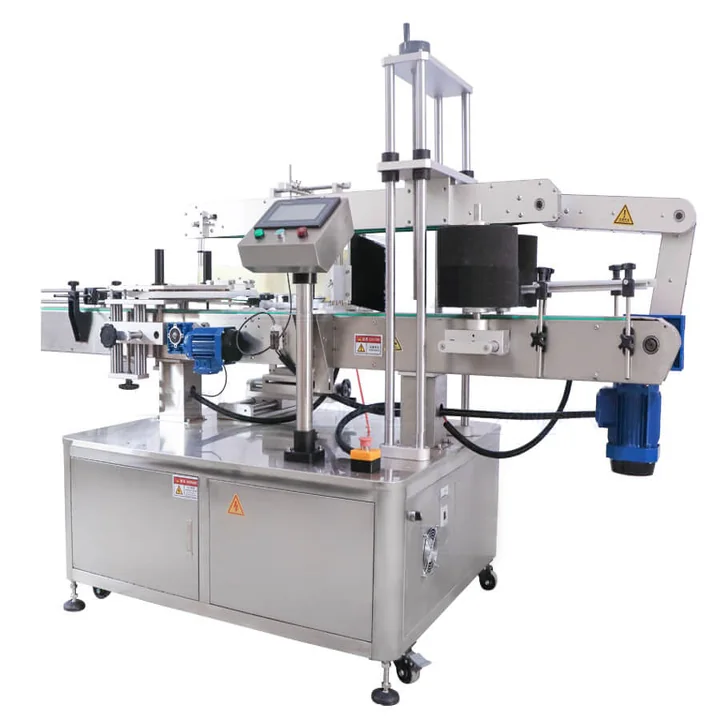
Selection intent
The application route should start with the real product, not a generic machine name. Shape, height, width, weight, surface finish and stability all influence how the pack travels through the labelling station.
The label material also matters. Paper, film, clear labels and textured stocks can require different sensing and wipe-down methods.
Guides, belts and hold-downs should be chosen around the product shape.
Paper, film and clear labels may need different setup and sensors.
The machine should match the realistic production rate and changeover pattern.
Machine routes
Most projects start with the pack shape, label position, material and output. These are the core machine routes to compare before requesting a quotation.
Best for established production where two labels need to be applied consistently in one pass.
Useful for smaller footprints, lower-volume production, trials and fast SKU changes.
Useful for flat packs, cartons, trays, sleeves and products requiring label application to upper and lower faces.
Quote preparation
For this application, include product dimensions, photos, label artwork, label stock and details of the current or planned line speed.
Where several pack sizes are involved, send the extremes of the range plus any awkward packs. The most difficult pack often determines the correct handling setup.
Related pages
Compare machine types, pack applications and buying guidance before preparing your enquiry.
Automatic front/back route for production.
Compact route for smaller sites.
Control label position and tolerance.
Details to send with a quote request.
Describe the closed tin or can, filled weight, usable label area, surface condition and any features affecting handling. State whether the finished pack needs one label, two separate labels or a wraparound label, and show the intended positions. Include label material and roll details, pack spacing, output target and line connections. Assess the proposed route using representative packs and production label stock.
Yes. Lancing UK can compare compact, automatic, twin-side and top/bottom labelling options against the pack, label material, changeover needs and output target.
Yes. Samples, drawings, label artwork and short videos of the current process help confirm handling risks before a final machine recommendation is made.
Share the pack, label material, output target and any integration requirement. The team can help you compare the most suitable compact, automatic or top/bottom labelling route.